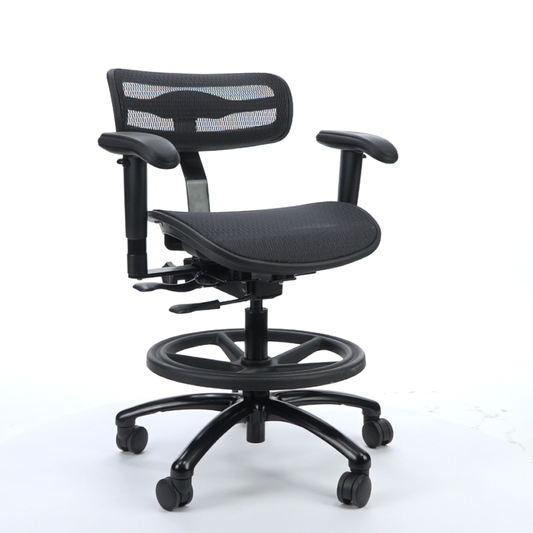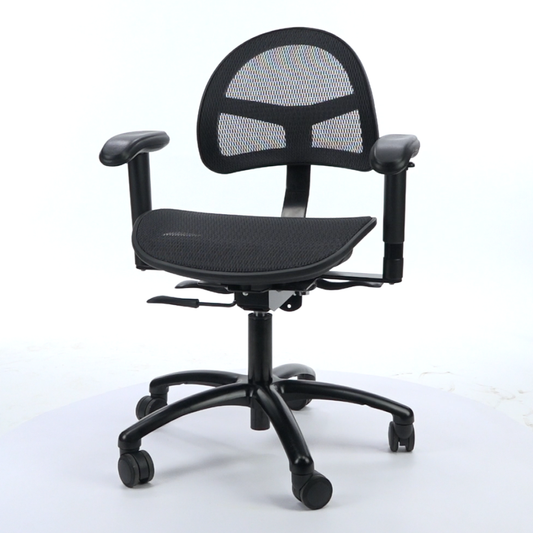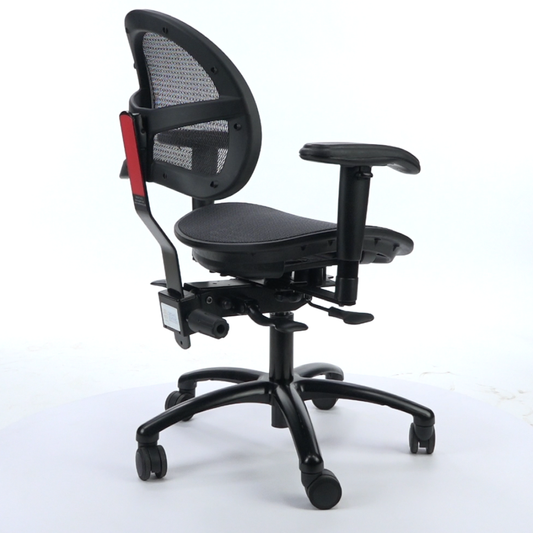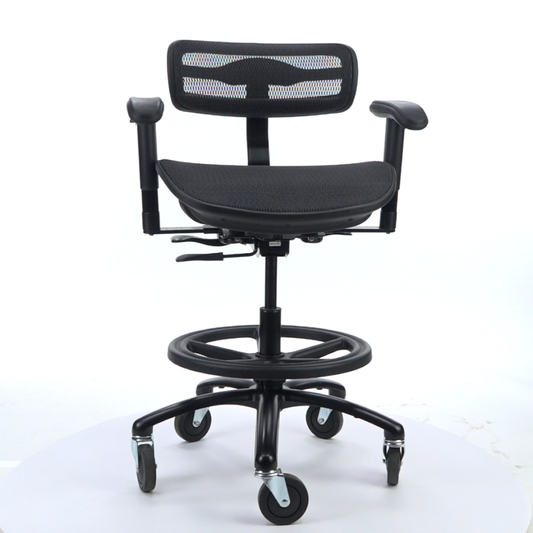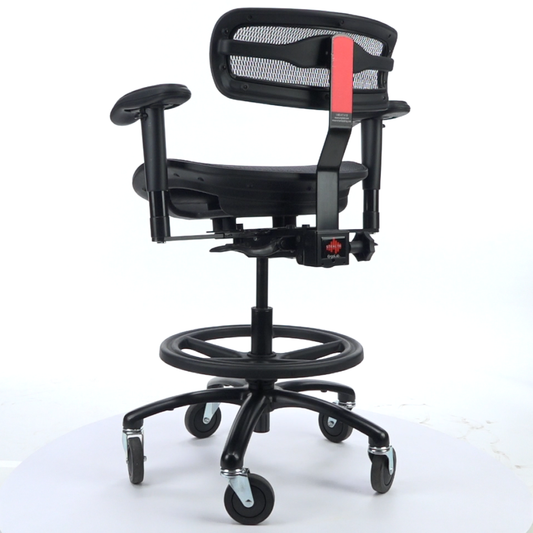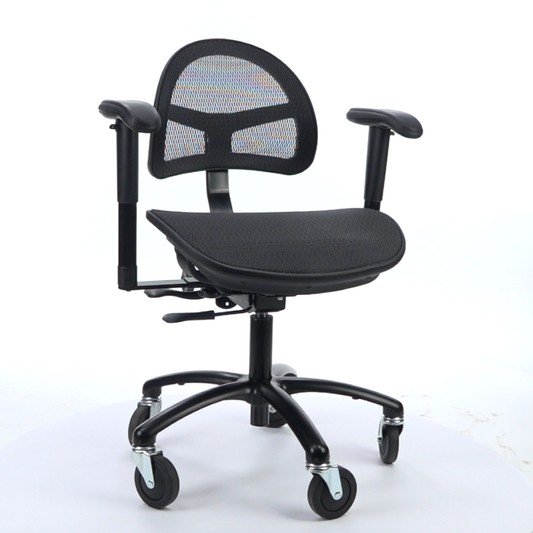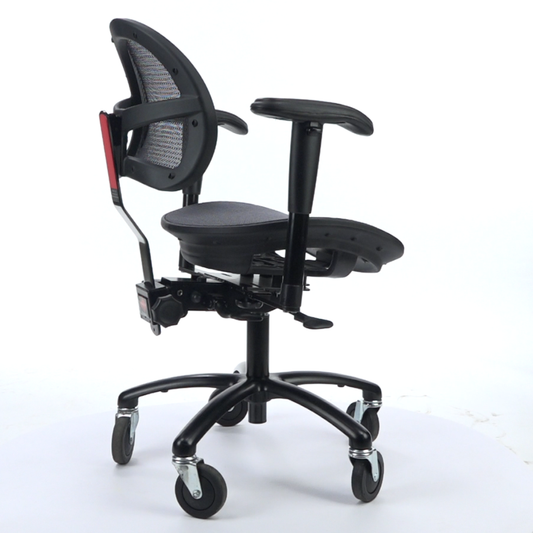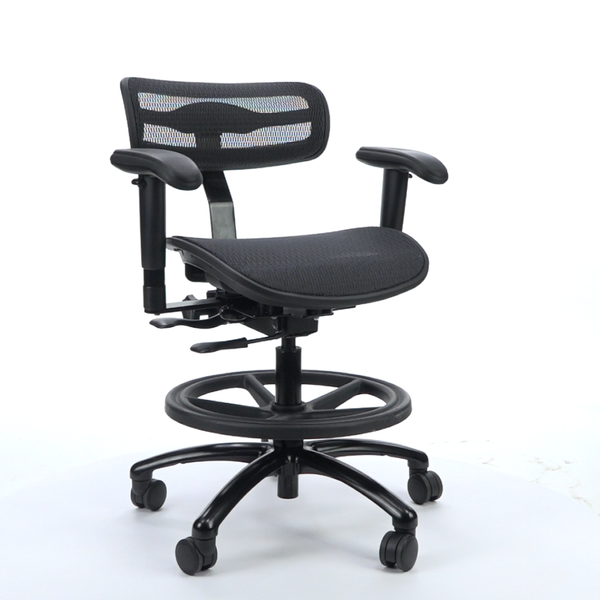
Stealth Standard
Recommended for engineers & players 6′0″ and under.
$599
- Lumbar backrest
- Standard seat
- Standard Casters
- 4D Removable Arms
- Adjustable Footring
- 2 Included Piston Heights
Multi-hour episodes. Back-to-back guest bookings. Leaning into the boom arm and the board take after take. Your chair is either helping you keep the energy up or working against you.
FIND YOUR STEALTH
Podcast and broadcast booths put you in the same forward-lean position as a mix engineer — reaching for the board, leaning toward the boom arm, holding focus through a two-hour interview or a full day of segments back to back.
Generic office chairs are built for sitting upright at a keyboard, not for that lean. Over a long recording day it shows up as the same lower-back ache and restless shifting that studio engineers deal with.
Stealth's patented ZenWave motion and Free-Float backrest were engineered for exactly that forward-lean posture.
Every Stealth Chair starts from the same battle-tested platform, built for the forward lean of booth work. Choosing the right one comes down to two simple questions.
Tap a choice to filter the models below ↓
Height is the only thing that decides Standard vs Pro. There's no weight limit — every Stealth Chair is built tough.
“Executive” changes only the backrest — a larger one. Everything else stays the same. If you want to lounge, go with the Executive.
Playing, not mixing? The Performer is our stage build — two piston heights, footring and chair glides, no arms.
Recommended for engineers & players 6′0″ and under.
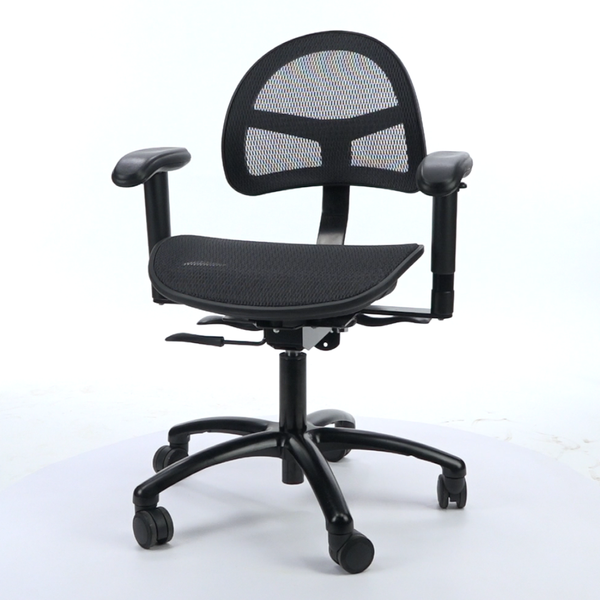
Recommended for engineers & players 6′0″ and under.
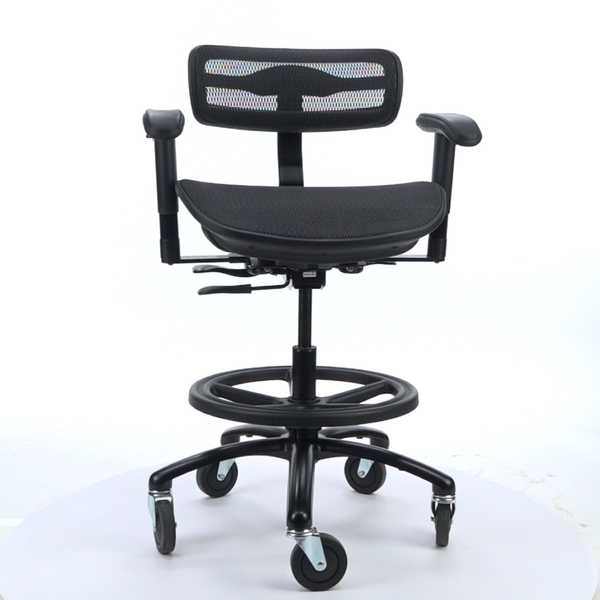
Recommended for engineers & players 6′0″ and taller.
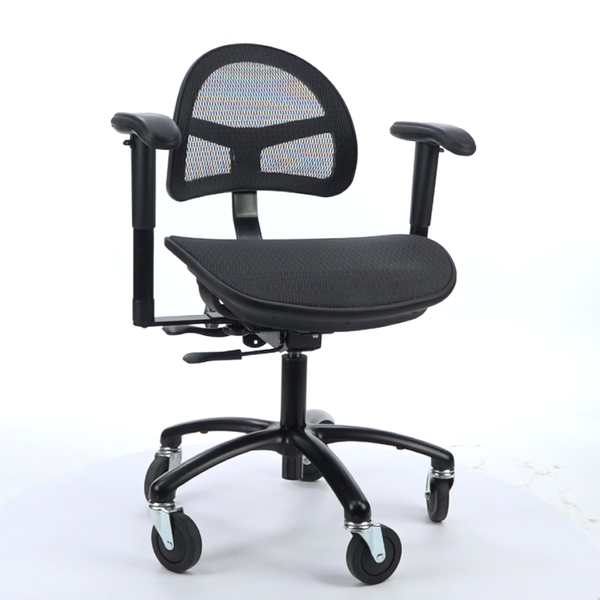
Recommended for engineers & players 6′0″ and taller.
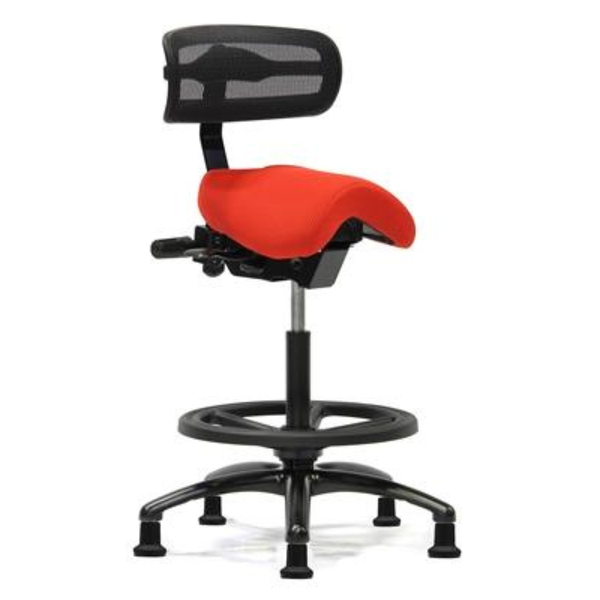
Recommended for guitarists, keyboardists & vocalists.
Every Stealth Chair includes two pistons: a Studio / Desk height and a taller Touring / Standing-desk height. When assembling, pick the one that meets your needs.
Every Pro and Pro Executive ships with two sets of wheels — standard casters and our larger 4″ TourMax casters. You decide which to roll on.
Toolless removal means you get to pull them off when you need clearance and drop them back in when you don't.
It is technically a posture. Your guest is comfortable, the levels are good, and your lower back has been holding you at a fixed angle since the cold open. Three questions.
This is the position conventional seating is worst at. Mandal's point is anatomical: chairs assume around 90 degrees of hip flexion and most people have nearer 60, so the shortfall comes out of the lumbar spine and your lower back rounds. Lean further and the backrest stops touching you, leaving those muscles to hold your torso unaided. Soderberg's EMG work found that tilting the seat forward significantly reduced exactly that muscle activity.
The right instinct — move the equipment to the body rather than the body to the equipment. What is left is the seat itself: a flat pan still rolls the pelvis backwards while you sit back, which is the shortfall Mandal described.
Performing a posture is more tiring than adopting one, because conscious muscular control is added to a body that is already fatiguing. Soderberg's finding is useful here: a forward-inclined seat lowered back-muscle activity during a seated task, so the position costs you less to hold.
Standard seat, 18.5 by 16.75 inches. A pan wider or deeper than your frame is not more generous, it is less supportive: the seat should end before your thigh does, or the front edge stops carrying you and starts pressing into the back of your leg.
Pro seat, 20.25 by 19.5 inches, with more cylinder travel. Both models are rated to 350lb — the difference is footprint, not strength. Too small a pan concentrates your weight into less tissue area, which is where numbness starts on a long day.
The practical constraint is silence before looks — a chair that creaks or rolls ends up in the edit. Stage Glide Casters are built for exactly this: non-marking, broadcast-quiet, controlled rather than free-rolling, with a locking caster in the set so it stays put during a take.
Tool-free adjustment is the whole specification for a shared chair. Set once for one body, it is wrong for every other body, and nobody re-rigs a chair before a shift — they sit badly for two hours instead.
Duration changes which variable matters. Wilke's work points at movement rather than posture as the thing that keeps a disc supplied, so the useful property over a long session is being able to shift constantly without ever leaving support — not finding one correct angle and freezing in it.
The core chair. Patented forward-lean motion and a Free-Float backrest that stays in contact as you move, sized for a frame under 6ft and 200lb.
Seat 18.5" × 16.75" · rated to 350 lbs · 5-year warranty
See the StandardSame mechanism, larger footprint, more cylinder travel. For a taller or heavier frame, a shared chair, or a day long enough that adjustment range matters more than anything else.
Seat 20.25" × 19.5" · rated to 350 lbs · 5-year warranty
See the ProPerch height with a backrest and a footring — which matters, because the research on sloped seating found it shifts load onto the legs unless they have somewhere to brace. Runs on the same caster options as the chairs, including the 4-inch TourMax wheels.
Perch height · footring · TourMax, stage glide or standard casters · 5-year warranty
See the PerformerThese are published ergonomics findings about seated posture in general, not tests of this chair, and none of them are medical advice. We have included the study that disagrees with us as well as the ones that support us. If your back hurts, see someone qualified.
Mix, master, and produce in comfort — built for the forward lean at the console.
Learn MoreFrom soundcheck to encore — Stage Glide casters and tour-tested durability.
Learn MoreMarathon recording sessions, boom-arm posture, and control-room comfort.
Learn MorePlay longer, sit better — a performance seat that supports your craft.
Learn MoreSunday services and rehearsal nights — all-day comfort at the sound booth.
Learn MoreColor grading, timeline scrubbing, and multi-monitor precision work.
Learn MoreLong streams, live chats, and on-camera posture that holds up for hours.
Learn More